

Primary Ovarian Insufficiency Market 2026: Strengthening Women’s Healthcare With Treatments, Achieving $1,819.57 Billion
Primary Ovarian Insufficiency Market Analysis
Primary Ovarian Insufficiency Market Analysis
Primary Ovarian Insufficiency Market Analysis
The Business Research Company's Primary Ovarian Insufficiency Market Report 2026 – Market Size, Trends, And Global Forecast 2026-2035
LONDON, GREATER LONDON, UNITED KINGDOM, March 9, 2026 /EINPresswire.com/ -- Primary Ovarian Insufficiency Market to Surpass $2 billion in 2030. In comparison, the Endocrine Testing which is considered as its parent market, is expected to be approximately $4 billion by 2030, with Primary Ovarian Insufficiency market to represent around 50% of the parent market. Within the broader Healthcare Services industry, which is expected to be $10,759 billion by 2030, the Primary Ovarian Insufficiency market is estimated to account for nearly 0.018% of the total market value.
Which Will Be the Biggest Region in the Primary Ovarian Insufficiency Market in 2030
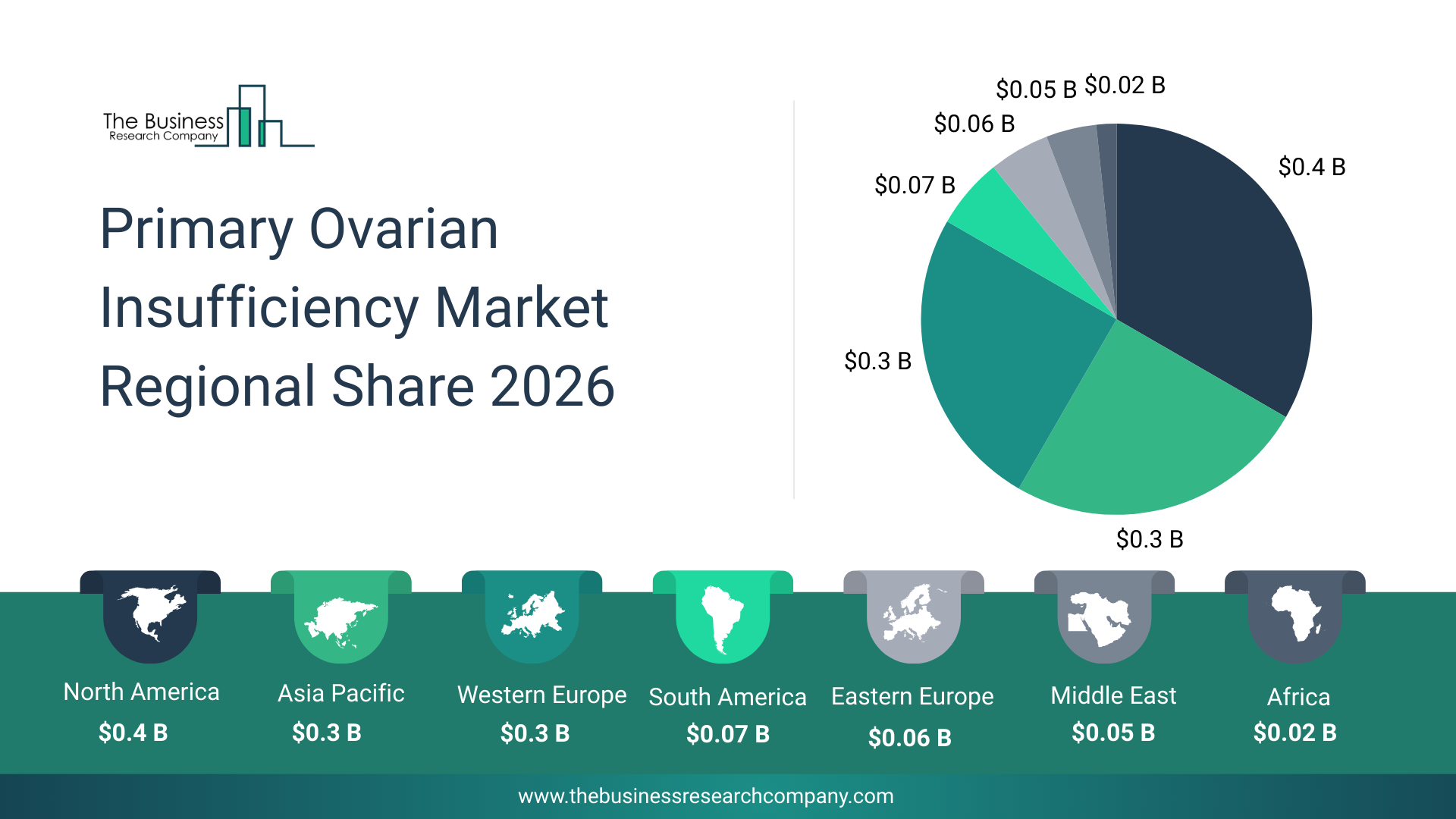
North America will be the largest region in the primary ovarian insufficiency market growth in 2030, valued at $561 million. The market is expected to grow from $401 million in 2025 at a compound annual growth rate (CAGR) of 7%. The strong growth can be attributed to the increasing incidence of lifestyle-related disorders and growing healthcare expenditure on women’s health.
Which Will Be The Largest Country In The Primary Ovarian Insufficiency Market In 2030?
The USA will be the largest country in the primary ovarian insufficiency market in 2030, valued at $500 million. The market is expected to grow from $360 million in 2025 at a compound annual growth rate (CAGR) of 7%. The strong growth can be attributed to the increasing incidence of lifestyle-related disorders and rising investments.
Request a free sample of the Primary Ovarian Insufficiency Market report:
https://www.thebusinessresearchcompany.com/sample_request?id=24387&type=smp&utm_source=EINPresswire&utm_medium=Paid&utm_campaign=Mar_PR
What will be Largest Segment in the Primary Ovarian Insufficiency Market in 2030?
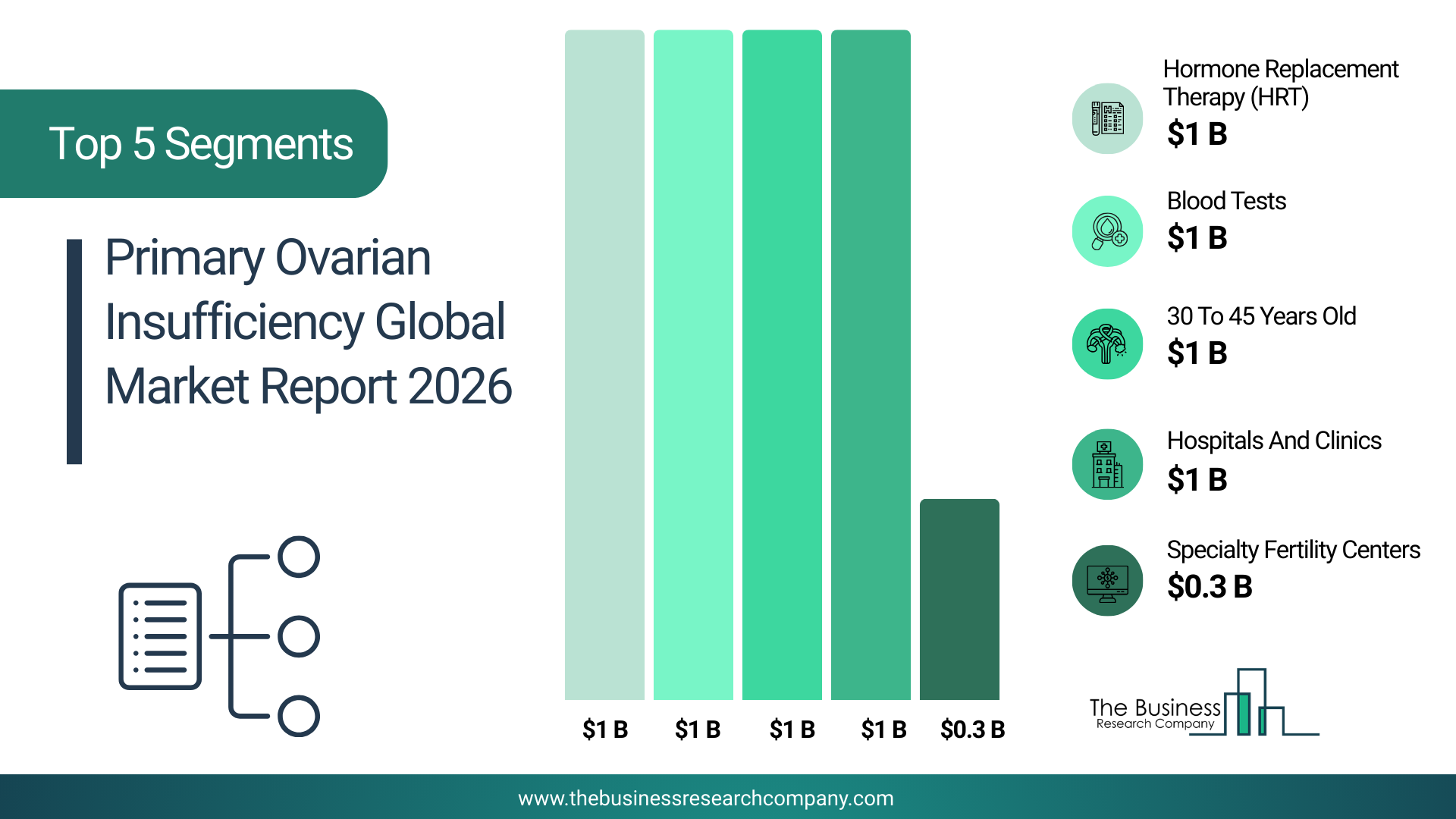
The primary ovarian insufficiency market is by type into hormone replacement therapy (HRT), calcium and vitamin D supplements, in vitro fertilization (IVF), stem cell therapy and other types. The hormone replacement therapy (HRT) segment market will be the largest segment of the primary ovarian insufficiency market segmented by type, accounting for 48% or $965 million of the total in 2030. The hormone replacement therapy (HRT) market will be supported by its recognition as the cornerstone of management to relieve hypoestrogenic symptoms, growing emphasis on preventing long-term complications such as osteoporosis and cardiovascular disease in women diagnosed before age 40, inclusion of systemic estrogen–progestin therapy in major international POI guidelines, availability of diverse delivery forms (oral, transdermal, vaginal) that improve adherence, increasing diagnosis rates of POI due to better awareness among gynecologists and endocrinologists and expanding use of individualized hormone regimens tailored to age, comorbidities and fertility plans.
The primary ovarian insufficiency market is segmented by diagnosis method into blood tests, ultrasound imaging and genetic testing. The blood tests market will be the largest segment of the primary ovarian insufficiency market segmented by sales channel, accounting for 54% or $1,089 million of the total in 2030. The blood tests market is supported by the central role of repeated follicle-stimulating hormone (FSH) and estradiol measurements in confirming POI, expanded use of anti-Müllerian hormone (AMH) as an adjunct marker of diminished ovarian reserve, guideline recommendations that prioritize lab-based hormonal assessment in women under 40 with amenorrhea or irregular cycles, increasing access to automated hormonal assays with high analytical sensitivity, wider screening of endocrine and autoimmune markers to clarify etiology and growing global awareness among clinicians that early biochemical diagnosis allows timely initiation of HRT and bone-protective strategies.
The primary ovarian insufficiency market is segmented by application into less than 20 years old, 20 to 30 years old, 30 to 45 years old and 45 years old and older. The 30 to 45 years old market will be the largest and fastest-growing segment of the primary ovarian insufficiency market segmented by industry, accounting for 53% or $1,052 million of the total in 2030. The 30 to 45 years old market will be supported by the relatively high proportion of women under 40 affected by POI (up to about 3.5%), frequent presentation with infertility or early menopause-like symptoms during peak reproductive years, strong utilization of assisted reproductive technologies and egg donation among this cohort, heightened focus on cardiometabolic and bone risks associated with prolonged hypoestrogenism, widespread implementation of guideline-based HRT until the average age of natural menopause and inclusion of this age group in many clinical studies and registries that refine diagnostic and therapeutic strategies.
The primary ovarian insufficiency market is segmented by end-users into hospitals and clinics and specialty fertility centers. The hospitals and clinics market will be the largest segment of the primary ovarian insufficiency market segmented by industry, accounting for 67% or $1,331 million of the total in 2030. The hospitals and clinics market will be supported by their concentration of expertise in IVF, donor-egg programs and fertility preservation for women with POI, growing number of POI patients referred directly to reproductive endocrinology units for assisted reproduction, accumulating evidence that most successful pregnancies in POI occur through oocyte donation and advanced ART protocols, expansion of fertility clinics that integrate on-site genetic counseling and psychological support, increasing global demand for IVF services and cross-border reproductive care among women with early ovarian failure and strategic positioning of many IVF centers as key partners in clinical research on innovative POI treatments and reproductive outcomes.
What is the expected CAGR for the Primary Ovarian Insufficiency Market leading up to 2030?
The expected CAGR for the primary ovarian insufficiency market leading up to 2030 is 9%.
What Will Be The Growth Driving Factors In The Primary Ovarian Insufficiency Market In The Forecast Period?
The rapid growth of the global primary ovarian insufficiency market leading up to 2030 will be driven by the following key factors that are expected to reshape reproductive endocrinology care, fertility services, and long-term women’s health management worldwide.
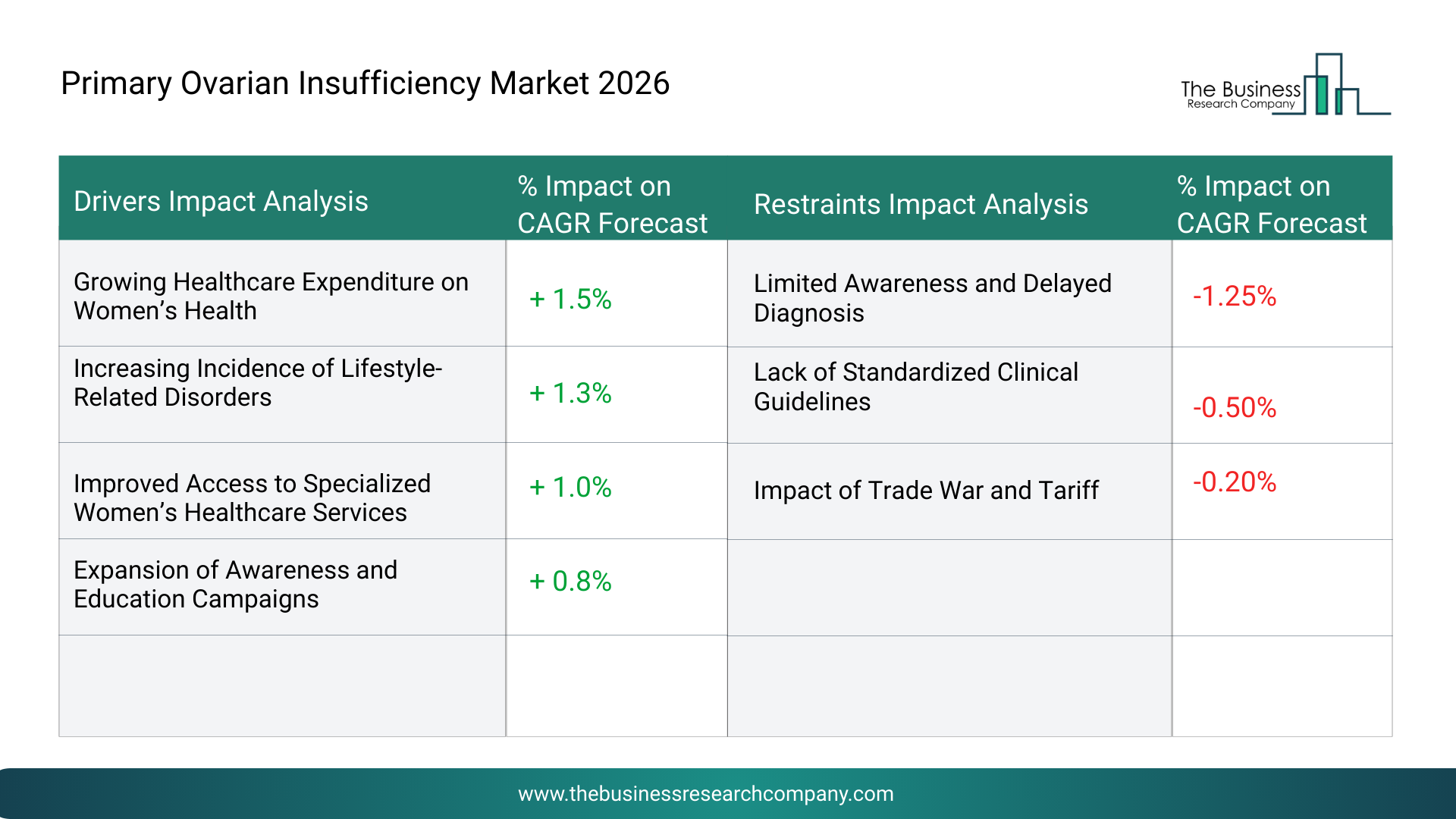
Growing Healthcare Expenditure on Women’s Health - The growing healthcare expenditure on women’s health will become a key driver of growth in the primary ovarian insufficiency market by 2030. As governments, insurers, and private healthcare providers channel greater funding toward women’s health priorities, access to early diagnosis, advanced testing, long-term hormone therapy, fertility preservation, and comprehensive reproductive care expands. Increased investment enhances availability of specialized endocrinology and reproductive services, allowing more women to receive timely and accurate evaluation for POI and related ovarian disorders. Additionally, higher spending accelerates the adoption of modern technologies, including advanced hormone assays, genetic screening tools, and personalized treatment-planning solutions. As a result, the growing healthcare expenditure on women’s health is anticipated to contributing to a 1.5% annual growth in the market.
Increasing Incidence of Lifestyle-Related Disorders - The increasing incidence of lifestyle-related disorders will emerge as a major factor driving the expansion of the primary ovarian insufficiency market by 2030. These conditions can impair hormonal balance, accelerate reproductive aging, and increase vulnerability to early ovarian dysfunction. As more women experience menstrual irregularities, reduced ovarian reserve, and broader reproductive challenges linked to lifestyle factors, demand for medical assessment and treatment will grow. This will boost the market for ovarian-reserve testing, hormonal evaluations, fertility counseling, and targeted therapeutic interventions aimed at maintaining hormonal health and supporting fertility potential. Moreover, increasing clinical awareness of lifestyle influences on ovarian insufficiency will encourage healthcare providers to adopt more holistic care approaches, stimulating growth across diagnostic, treatment, and preventive segments of the POI market. Consequently, demand for increasing incidence of lifestyle-related disorders is projected to contributing to a 1.3% annual growth in the market.
Improved Access to Specialized Women’s Healthcare Services -The improved access to specialized women’s healthcare services as a major factor driving the expansion of the primary ovarian insufficiency market by 2030. With more clinics offering advanced diagnostics and skilled specialists, women benefit from reduced wait times, streamlined referrals, and consistent, high-quality care. This greater accessibility encourages earlier evaluation for menstrual disturbances, fertility issues, and premature menopausal symptoms, increasing POI detection rates and enabling timely treatment. Enhanced access also supports wider use of fertility-preservation techniques, hormone-replacement therapies, and personalized long-term management strategies for POI patients. Therefore, Improved access to specialized women’s healthcare is projected to contributing to a 1.0% annual growth in the market.
Expansion of Awareness and Education Campaigns - The expansion of awareness and education campaigns will emerge as a major factor driving the expansion of the primary ovarian insufficiency market by 2030. As public understanding improves, more women will recognize early signs such as irregular menstruation, premature menopausal symptoms, and fertility difficulties, leading them to seek medical evaluation sooner. Targeted educational initiatives for both patients and healthcare professionals will help shorten diagnostic timelines, promote routine ovarian-reserve testing, and increase referrals to reproductive endocrinology specialists. Greater awareness also reduces stigma around early ovarian decline and encourages earlier adoption of fertility counseling, hormone therapy, and genetic screening. As knowledge of POI becomes more widespread, demand for advanced diagnostics, individualized treatment pathways, and ongoing hormonal support will rise, boosting market expansion. Consequently, the expansion of awareness and education campaigns is projected to contributing to a 0.8% annual growth in the market.
Access the detailed Primary Ovarian Insufficiency Market report here:
https://www.thebusinessresearchcompany.com/report/primary-ovarian-insufficiency-global-market-report?utm_source=EINPresswire&utm_medium=Paid&utm_campaign=Mar_PR
What Are The Key Growth Opportunities In The Primary Ovarian Insufficiency Market in 2030?
The most significant growth opportunities are anticipated in the hospital-based care for primary ovarian insufficiency market, the early ovarian failure in 30–45 age market, the primary ovarian insufficiency (Poi) blood testing market, and the hormone replacement therapy for primary ovarian insufficiency market. Collectively, these segments are projected to contribute over $2 billion in market value by 2030, driven by increasing awareness of reproductive health disorders, rising diagnosis rates through early screening, and expanding use of hormone replacement therapies for long-term management. This surge reflects the growing focus on fertility preservation, personalized treatment approaches, and improved clinical monitoring, fueling transformative growth within the broader primary ovarian insufficiency care industry.
The hospital-based care for primary ovarian insufficiency market is projected to grow by $452 million, the early ovarian failure in 30–45 age market by $402 million, the primary ovarian insufficiency (Poi) blood testing market by $363 million, and the hormone replacement therapy for primary ovarian insufficiency market by $342 million, over the next five years from 2025 to 2030.
The Business Research Company (www.thebusinessresearchcompany.com) is a leading market intelligence firm renowned for its expertise in company, market, and consumer research. We have published over 17,500 reports across 27 industries and 60+ geographies. Our research is powered by 1,500,000 datasets, extensive secondary research, and exclusive insights from interviews with industry leaders.
We provide continuous and custom research services, offering a range of specialized packages tailored to your needs, including Market Entry Research Package, Competitor Tracking Package, Supplier & Distributor Package and much more
Disclaimer: Please note that the findings, conclusions and recommendations that TBRC Business Research Pvt Ltd delivers are based on information gathered in good faith from both primary and secondary sources, whose accuracy we are not always in a position to guarantee. As such TBRC Business Research Pvt Ltd can accept no liability whatever for actions taken based on any information that may subsequently prove to be incorrect. Analysis and findings included in TBRC reports and presentations are our estimates, opinions and are not intended as statements of fact or investment guidance.
The Business Research Company
Americas +1 310-496-7795
Europe +44 7882 955267
Asia & Others +44 7882 955267 & +91 8897263534
Email: info@tbrc.info
Oliver Guirdham
The Business Research Company
+44 7882 955267
info@tbrc.info
Visit us on social media:
LinkedIn
Facebook
X
Legal Disclaimer:
EIN Presswire provides this news content "as is" without warranty of any kind. We do not accept any responsibility or liability for the accuracy, content, images, videos, licenses, completeness, legality, or reliability of the information contained in this article. If you have any complaints or copyright issues related to this article, kindly contact the author above.
