

Immune Biomarkers May Predict Response to Bladder Cancer Treatment
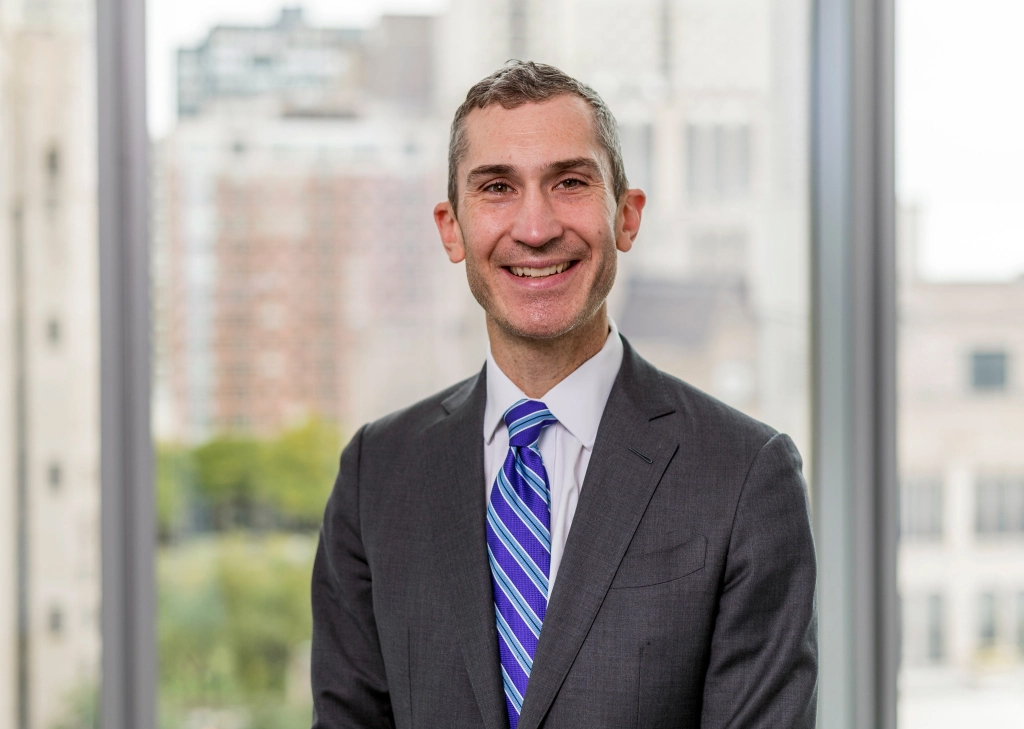
A Northwestern Medicine study has offered new clues as to why immunotherapy works well for some bladder cancer patients but fails for others, according to a study published in the Journal of Clinical Investigation.
In the study, scientists investigating Bacillus Calmette-Guérin (BCG) — the standard immunotherapy treatment for high-risk bladder cancer — uncovered immune system biomarkers that distinguish patients who respond to treatment from those who do not.
The findings could pave the way for more personalized therapies and improved outcomes, said Joshua Meeks, ‘05 MD, ‘03 PhD, ‘06, ‘11 GME, the Edward M. Schaeffer, MD, PhD Professor of Urology, who was senior author of the new study.
“This study was specifically looking at the tumor immune cells and the normal immune cells adjacent to the tumor,” said Meeks, who is also a professor of Biochemistry and Molecular Genetics and a member of the Robert H. Lurie Comprehensive Cancer Center of Northwestern University. “We really wanted to focus on how the immune cells function in these people, because we give them this therapy, and each individual has a very different response.”
BCG therapy, which utilizes a weakened bacterial strain to provoke an immune response, has been the standard of care for high-risk non-muscle-invasive bladder cancer for years. Despite its widespread use, scientists have not fully understood how BCG triggers anti-cancer immunity or why it fails in a subset of patients.
To address this, investigators used single-cell RNA sequencing (scRNA-seq), a technology that enables scientists to examine gene expression in individual immune cells. By analyzing immune cells collected from the bladder environment and bloodstream, the team compared patients who responded to BCG with those who did not.
Patients who responded well to BCG treatment showed a marked increase in a specific type of immune cell known as Th17-like Th1 cells. These cells are highly inflammatory and produce signaling molecules called cytokines that help the immune system mount an attack on tumors.
In contrast, patients who did not respond to therapy exhibited a very different immune profile. Their tumors were associated with exhausted CD8+ T-cells, which are less effective at killing cancer cells, and with increased regulatory T-cells (Tregs), which suppress immune activity.
Together, these factors create an immunosuppressive environment that allows cancer to persist despite treatment.
“The interaction of the bladder macrophages with the T-cells is what’s determining the response to the therapy,” Meeks said. “In patients that didn’t respond to treatment, there was a lot more exhaustive signaling and dampening of the T-cell response, whereas in patients that had a good response, there’s more of an inflammatory immune activation.”
Investigators also found that interactions between myeloid cells and T-cells play a role in determining treatment success.
In patients who responded to therapy, myeloid cells appeared to encourage inflammatory, tumor-fighting T-cell behavior. In non-responders, these same cells promoted immune suppression, dampening the body’s ability to attack cancer.
Next, the team employed a machine learning approach to identify biomarkers that could predict treatment response.
They found that certain cytokines associated with Th17-like Th1 cells were strong indicators of a successful response to BCG. These biomarkers were then validated in a separate group of bladder cancer patients.
While further studies are needed to translate these findings into routine clinical practice, the authors said, the work represents a step toward understanding one of the most widely used cancer immunotherapies.
“Our previous work provided details about the tumors, and now we’ve found that the patient’s immune system determines treatment response,” Meeks said. “The next step is to ask: can we manipulate that?”
Future studies in the Meeks laboratory will focus on modulating immune responses in patients with bladder cancer to improve treatment success, he said.
Weiguo Cui, PhD, professor of Pathology in the Division of Experimental Pathology and a member of the Lurie Cancer Center and the Center for Human Immunobiology, was a co-author of the study.
The study was supported by Veteran’s Health Administration grants BX005599 and BX003692, Department of Defense Impact Award 530 HT94252410507 and National Cancer Institute grant R01CA298333. Additional funding was provided by the Robert H. Lurie Comprehensive Cancer Center Foundation Core Facility Pilot Project Award.
Legal Disclaimer:
EIN Presswire provides this news content "as is" without warranty of any kind. We do not accept any responsibility or liability for the accuracy, content, images, videos, licenses, completeness, legality, or reliability of the information contained in this article. If you have any complaints or copyright issues related to this article, kindly contact the author above.
